
On a mission of prevention
In 2000, the Center for Disease Control reported that one out of every three healthy children born in the United States will get diabetes in their lifetime.
Because of this, Kathi Taylor, a registered dietician and certified diabetes educator with Beatrice Community Hospital and Health Center, has devoted her time to educating the public about diabetes care.
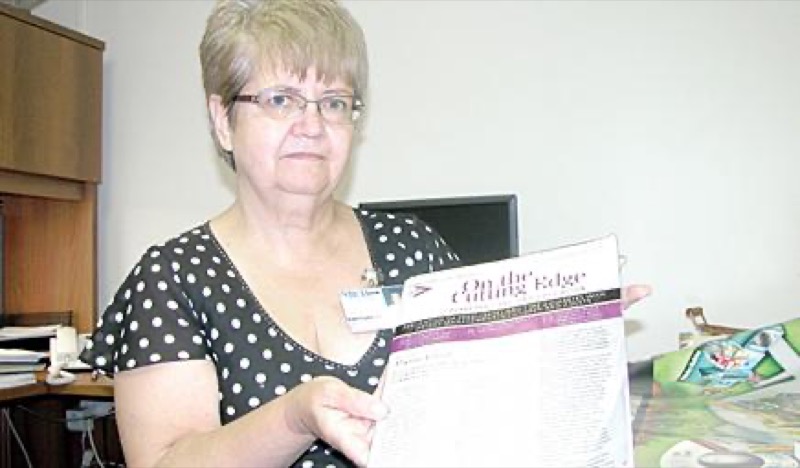
Taylor was recently part of a panel of peer reviewers for the Summer 2008 edition of “On The Cutting Edge,” a publication from the Diabetes Care and Education Dietetic Practice Group of the American Dietetic Association.
Taylor was one of many volunteers chosen by the publication’s editorial board. Her duty was to look at the articles pre-publication and make sure they were accurate, clear, understandable and diverse.
These publications, Taylor said, are often used by those who are new in the field and cover a wide array of topics.
The theme for this edition was “Prevention of Prediabetes and Type 2 Diabetes with Weight Management in Children and Adults.” It included articles on weight management for children, prevention of weight regain and prevention of childhood obesity, among several other topics.
With a family background full of diabetic patients, Taylor is passionate about diabetes education.
To even be considered, Taylor had to be a dietician for two years, have 1,000 hours in education and take a large exam to be qualified as a certified diabetes educator.
Beginning in November, which is National Diabetes Month, Taylor will conduct two special and free classes on diabetes education.
The first will focus on the reality that Type 2 diabetes can be prevented or delayed. Topics covered will be defining diabetes and pre-diabetes while looking at blood glucose numbers.
Pre-diabetes is when blood glucose levels are higher than normal but not high enough to be diagnosed as diabetes. According to the American Diabetes Association, those diagnosed with Type 2 Diabetes almost always have pre-diabetes, meaning that with education and small lifestyle changes, Type 2 Diabetes can be delayed.
The second class will focus on managing diabetes. The class will cover coping and understanding the diagnosis, eating healthy, different physical activities, monitoring blood glucose, problem solving and reducing complications. Taylor also works specifically with younger children on their blood glucose readers or insulin pumps.
The insulin pump allows children to be children, Taylor said. They don’t have to be someone with diabetes who has to stop four times in a day to give themselves an insulin shot.
Taylor emphasized how small of a change everyone can make to cause a huge difference in their health.
“I remember when pop bottles were 6.5 ounces,” she said, holding what’s now considered as a “tiny” glass pop bottle. Now the common size is 20 ounces and many of us couldn’t dream of drinking anything less.
Even juices, which we consider healthy, come in a size that’s too large to allow for healthy drinking.
“If you are served a bigger portion, you will eat more,” Taylor said, remembering when eating a cup of a spaghetti was enough for a meal.
“Now, anything less than two cups makes us feel like we’re starving,” she said.
Making a small change like drinking less pop or taking the stairs can make a huge difference.
“I give myself permission to have dessert,” Taylor said, because then she doesn’t feel as though she’s denying herself something. She said diets often fail because you’re completely changing your food choices or you’re cutting out all of the foods you like. Smaller portions — or just giving yourself permission for a sweet — can help you relax and not feel pressured into eating healthy.
If you allow yourself the things you like, chances are you might not even eat dessert, because you aren’t worrying during your meal that you are being denied something you enjoy eating.
In the prevention of diabetes, Taylor emphasized that kids have different eating patterns that adults, and even different than those of other children.
At about 18 months, children experience a significant slow-down in growth, Taylor said. This causes a significant slow down in food intake, too.
Making a child sit and finish their food even though they’re no longer hungry is a dangerous thing to do. This teaches children to eat when they’re not hungry, and in some cases, causes obesity and diabetes from the poor eating habits.
Taylor said that many people don’t realize that diabetes education is covered under Medicare and most insurance programs, so getting the education to prevent or manage diabetes is possible.
In Taylor’s classes, she likes to allow the group to speak first, using special “conversation maps” to spark conversation. The map has different issues dealing with diabetes, like changes in blood glucose levels, conditions of when, where and what you eat, as well as feelings someone who has just been diagnosed with diabetes may have.
Often times, Taylor said, the group solves their own issues by sharing experiences and feelings.
Taylor doesn’t like the label “diabetic” because she said it makes people feel like now they’re labeled and must completely change their lifestyle, which isn’t true. The management of diabetes, as well as obesity, can be simple changes based on a knowledge of different calories and carbs.
People with diabetes don’t have to automatically switch to sugar-free ice cream, Taylor said, which only has one less carb than regular ice cream. Taylor wants people to come to her classes because they can learn that diabetes doesn’t have to be life-altering.
“You really can prevent diabetes,” Taylor said.